

When Music Becomes Medicine: Unlocking Memory in Dementia Care
By guest writer Rosie Buckley | Instagram
Dementia can have a huge impact on someone’s life, altering their thinking, memory, and communication, which can be devastating for families to witness. While there is no cure for dementia, music has been shown to reduce anxiety, encourage memory recall, and enhance communication.
Why Music Reaches the Mind
The limbic system is a part of the brain that helps people feel emotions and helps people remember things. Two important parts of it are the amygdala and hippocampus. The hippocampus helps you make and store memories. When we listen to music, these parts of the brain “light up”. That’s why a song may make you feel happy, excited or reminded of something from the past. For someone with dementia, hearing familiar songs can help the brain remember things that may be harder to recall. Music can bring back memories and feelings. This is why music-based activities can be a powerful tool for those living with dementia.
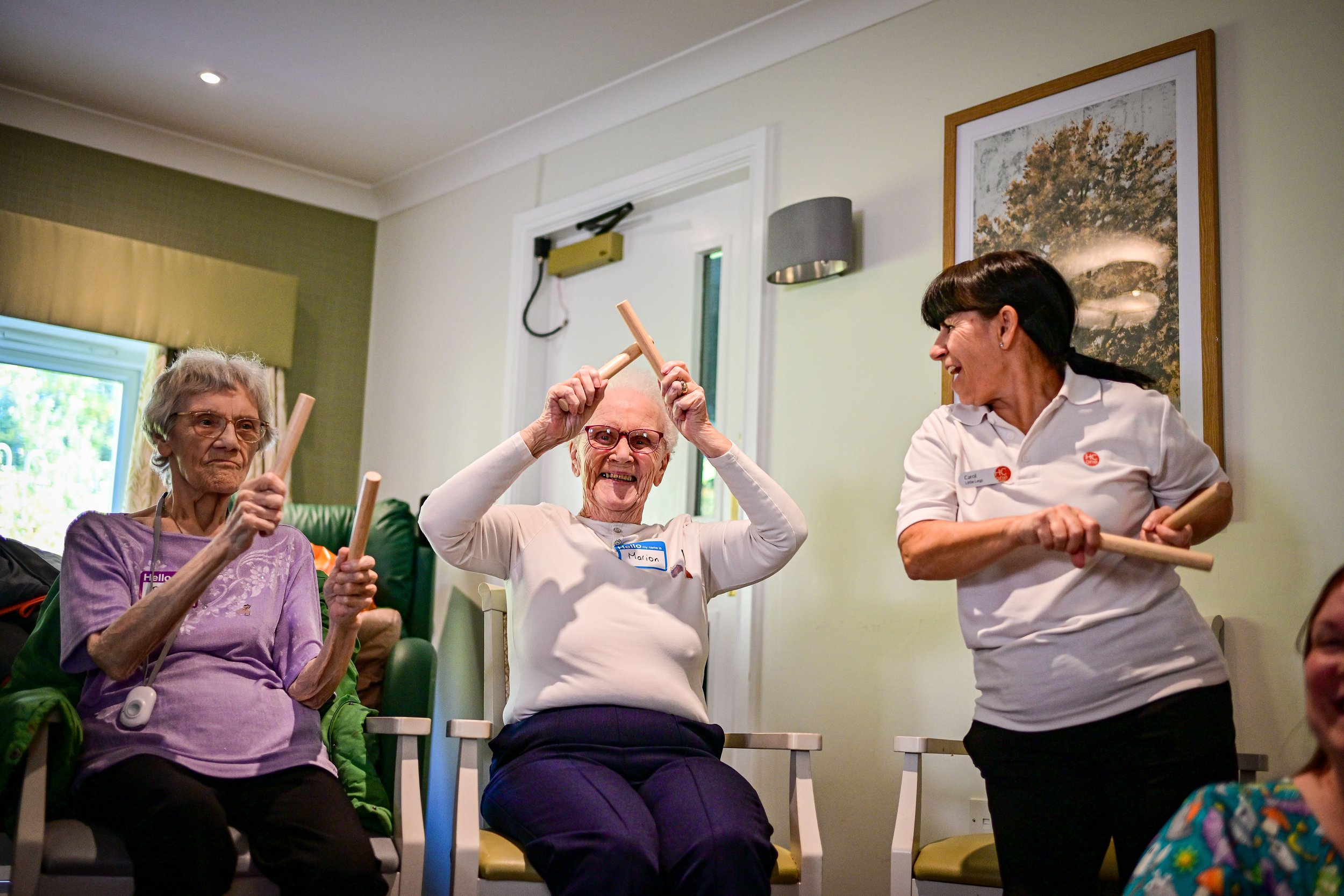
Two ladies enjoying music activities
Benefits of Music For People Living With Dementia
Supporting Communication
Dementia can make it challenging for individuals to communicate, but research has found that music can help. Music provides the opportunity for self-expression through movements like clapping, tapping feet and humming. Listening to music with others can also strengthen bonds through shared enjoyment. Communication doesn’t always have to be verbal; non-verbal interactions go a long way too.
Trying to Help Bring Memories to the Surface
Looking back on memories can enable people with dementia to reconnect with certain aspects of themselves. Music can help with this by helping them remember moments from the past. This could be through listening to a song that reminds them of a specific time in their life, such as a childhood memory, the birth of their child, or their wedding day. These moments matter, as they remind us that memory is not simply stored in facts and language but woven into feeling, rhythm, and meaning.
Reduces Anxiety/Agitation
As people with dementia unlock memories through listening to music, they can feel a sense of security and comfort, as well as experience positive emotions. This not only reconnects them to parts of their identity, but also minimises uncomfortable feelings like anxiety and agitation. Gentle melodies may also prevent distress and restlessness, and more uplifting songs can lift spirits, spark laughter, and encourage social interaction.
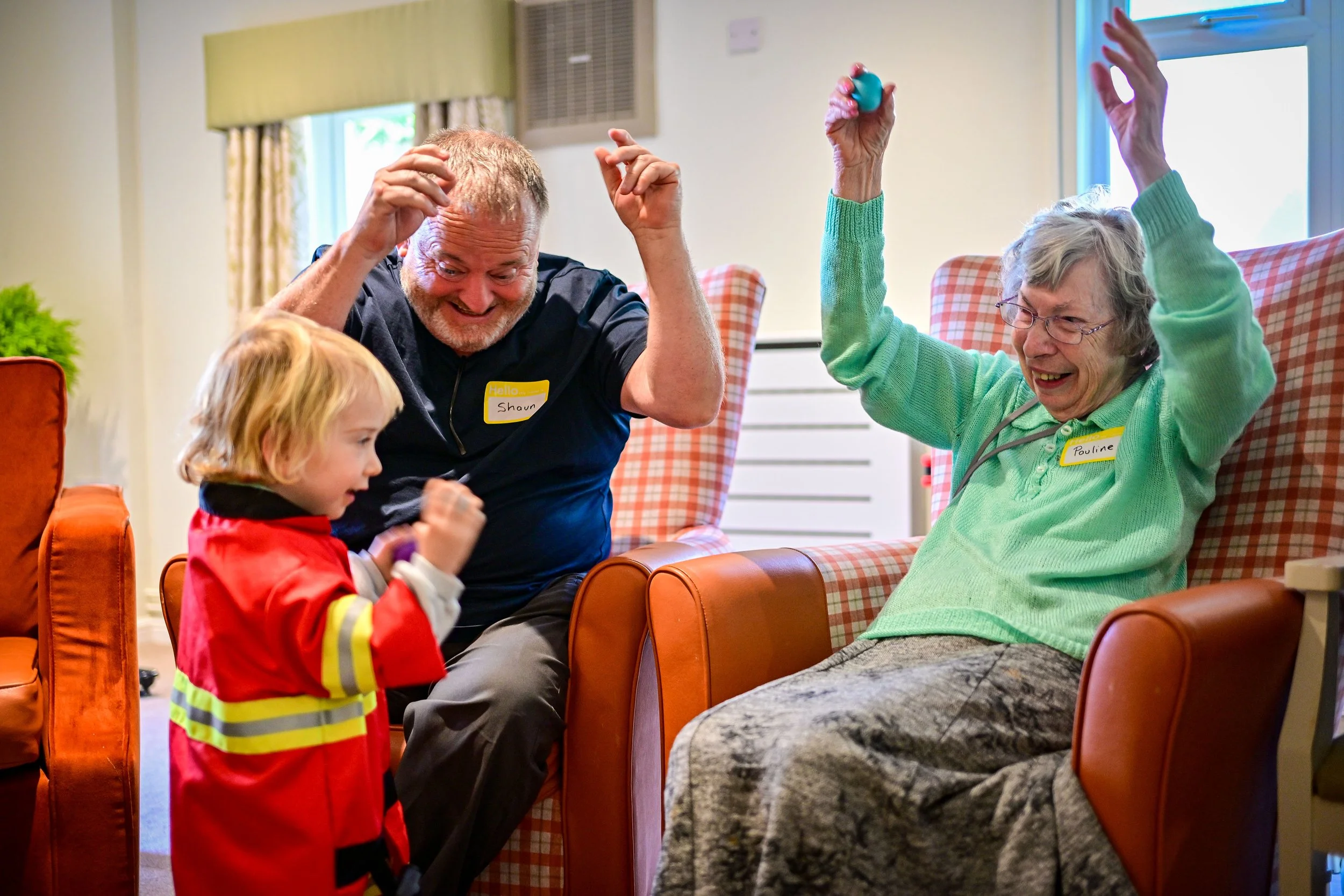
Lady dancing with child
Supporting Wellbeing for People with Dementia and Their Families
Listening to music can help people with dementia find comfort, and this is heartwarming for relatives to witness. Here are some ways you can use music to support a loved one with dementia and connect with them.
Creating a personalised playlist: Playing songs they enjoy, particularly ones from their childhood, can help resurface memories.
Encourage them to dance: You can do this by swaying, humming or tapping your feet to music. Dancing is a great way to engage with music, can improve mood, and offers the chance to exercise.
Join a dementia music group: These create a safe space for individuals with dementia to take part in music-related activities.
Raising Awareness
Music-based activities for dementia can be done with an individual or in a group setting. It allows people living with dementia to manage symptoms better, improve their memory and communication, and provides an outlet for expression. Music-based activities are becoming more and more popular, but raising awareness is still important. This can be done by sharing personal stories and facts on social media platforms, writing blogs, and engaging in community events.
The Together Project
The Together Project connects generations through joy. No matter your life stage, social isolation is one of society’s biggest challenges. This is why their programmes aim to reduce loneliness and foster community togetherness. TTP organise activities that unite people who may not usually come into regular contact, with a focus on friendship and fun. Their Songs & Smiles programme initiative uses music and plays a particularly important role in supporting wellbeing. Most of the residents who attend Songs & Smiles are living with some stage of dementia, and sessions are intentionally structured with this in mind. You can find out more about what they do on their website.
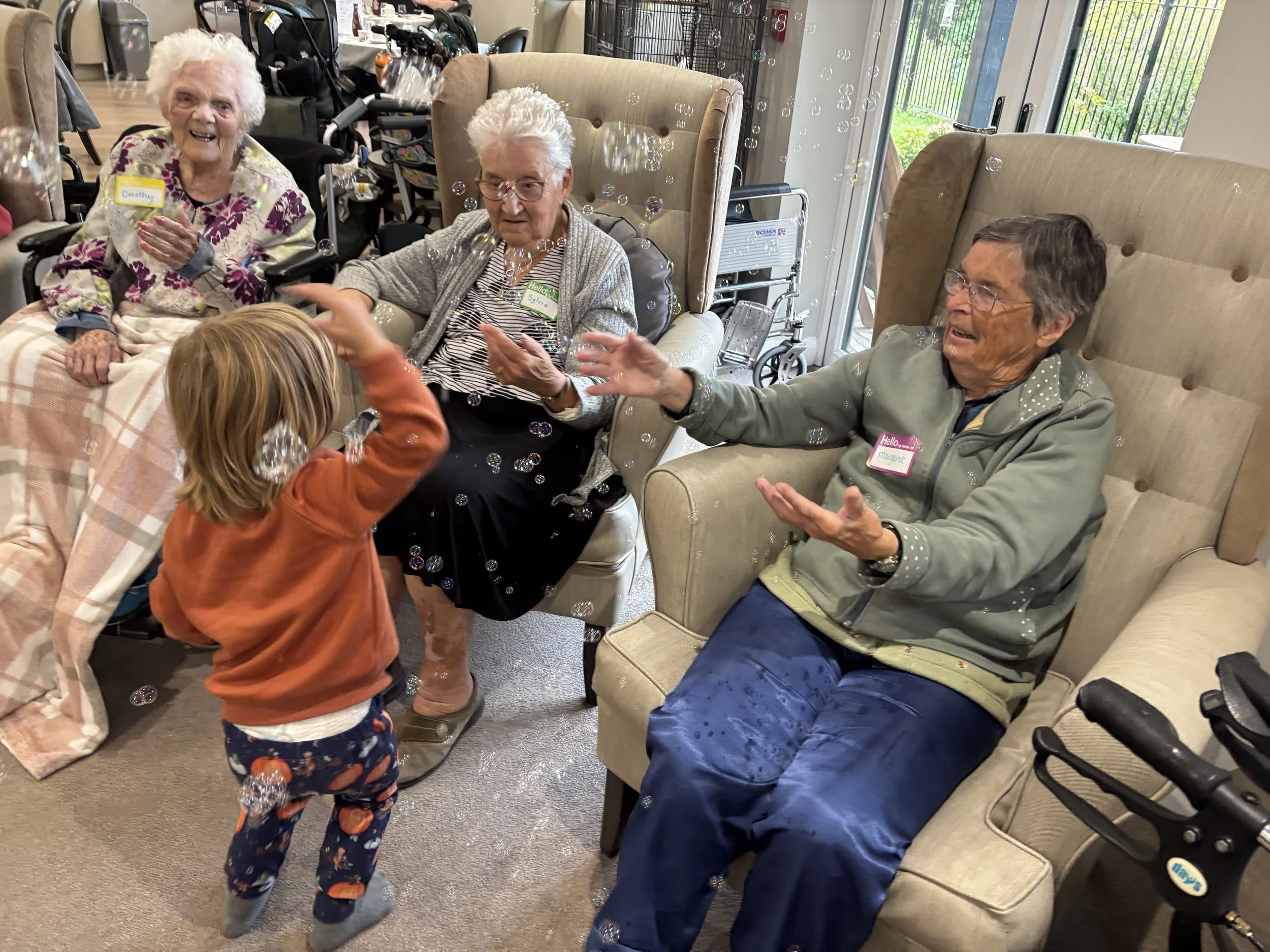
Residents enjoying bubbles with music with a child